

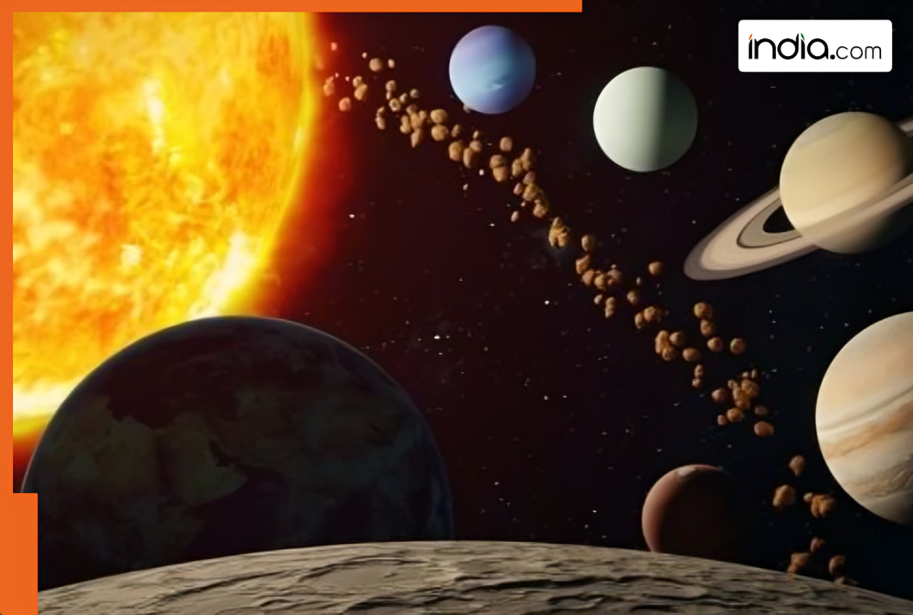
2025 kicks off with an extraordinary celestial display for astronomy enthusiasts, a planetary parade. This phenomenon, where multiple planets align in the night sky from Earth’s perspective, will occur in January, peaking on the 25th when seven planets align in a stunning arc across the heavens. Here’s everything you need to know to witness this rare spectacle.
What Is a Planetary Parade?
A planetary parade happens when four or more planets appear lined up in the sky. While they aren’t truly aligned in space, their positioning from Earth’s perspective creates a striking visual. These events are infrequent and noteworthy, especially when several planets become visible simultaneously.

The 2025 Planetary Parade: Key Details
Visible Planets: Venus, Mars, Jupiter, Saturn, Neptune, Uranus, and Mercury. On the peak date of January 25, 2025, when Mercury joins the lineup for a brief window.
Timeline: The event begins around January 17 with Venus and Saturn appearing close together, about two degrees apart in the sky. The full seven-planet parade is visible for a few days around the 25th before Mercury, Saturn, and Neptune move too close to the Sun by March.
Best Time To Watch
Northern Hemisphere: Shortly after sunset, around 8:30 p.m. local time, is ideal. Venus, Saturn, and Neptune will be visible on the horizon, while Mars, Jupiter, and Uranus stay in view longer.
Visibility Window: Venus, Saturn, and Neptune set by 11:30 p.m. to midnight, while Mars and Jupiter remain until the early morning hours.
Where To Watch
Ideal Location: Choose a spot with a clear, unobstructed view of the western horizon. Avoid areas with light pollution for the best experience.
Equipment: While Venus, Mars, Jupiter, and Saturn are visible to the naked eye, binoculars or a telescope will enhance views of Uranus and Neptune.
Celestial Highlights
January 17-18: Venus and Saturn come within 2 degrees of each other in the southwestern sky, offering a brilliant pairing.
Mars at Opposition: Mars will be directly opposite the Sun, making it visible all night long throughout January.
The Grand Parade: On January 25, Mercury joins the six other planets, completing the lineup. However, spotting all seven planets may be challenging due to the proximity of Saturn, Mercury, and Neptune to the Sun.
Don’t miss this chance to marvel at the wonders of our solar system, grab your binoculars or telescope, find a clear viewing spot, and enjoy the show!