

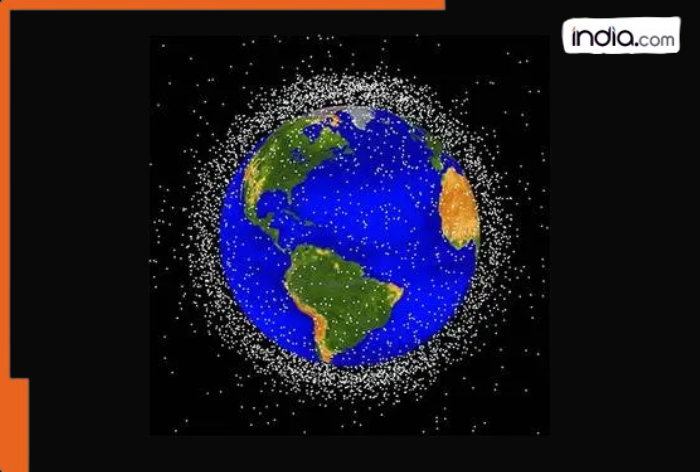
NASA Space debris: With more than 14,000 satellites whirling around the Earth, and only about 3,500 actually functioning, space is becoming just a bit too crowded. The debris of around 120 million scattered space pieces floating in orbit doesn’t make it any less congested either. Consequently, the United Nation’s space traffic custodians are growing increasingly anxious. It appears high time for countries and commercial entities to reevaluate their satellite dispatch routines. A curtailing of satellite launches has been advised with a parallel push on initiatives to clean up the astral litter.
Traffic at Low Earth Orbit
Reports also have it due to huge traffic at an altitude of 100 to 1000 kilometers, no other rocket will be able to cross the Low Earth Orbit. It is also being reported that the huge traffic is going to impact the sunlight that reaches to earth.
“LEO is an orbital space junk yard. There are millions of pieces of space junk flying in LEO. Most orbital debris comprises human-generated objects, such as pieces of space craft, tiny flecks of paint from a spacecraft, parts of rockets, satellites that are no longer working, or explosions of objects in orbit flying around in space at high speeds”, NASA said on its website about the space debris.
NASA on management of Space debris
“Most “space junk” is moving very fast and can reach speeds of 18,000 miles per hour, almost seven times faster than a bullet. Due to the rate of speed and volume of debris in LEO, current and future space-based services, explorations, and operations pose a safety risk to people and property in space and on Earth”, NASA added.
Talking more about Space junk, it is no one countries’ responsibility, but the responsibility of every spacefaring country. The management of space debris is both an international challenge and an opportunity to preserve the space environment for future space exploration missions, NASA has said.
In order to control the NASA Orbital Debris Program, officially began in 1979 in the Space Sciences Branch at the Johnson Space Center (JSC) in Houston, Texas. The program looks for ways to create less orbital debris, and designs equipment to track and remove the debris already in space.