
ISRO EOS 08 Launch: The Indian Space Research Organisation (ISRO) initiated the six-and-a-half-hour countdown for the launch of the third developmental flight of the Small Satellite Launch Vehicle (SSLV) at 02:47 am on Friday. The SSLV-D3-EOS-08 Earth observation satellite mission follows the successful launch of the second test flight of the SSLV-D2-EOS-07 in February last year.
Notably, this mission is the third for the Bengaluru-headquartered space agency in 2024, after the successful PSLV-C58/XpoSat in January and GSLV-F14/INSAT-3DS missions in February.
In an update on Friday, ISRO said, “SSLV-D3-EOS-08 Mission — Six-and-a-half-hour countdown leading to the launch commenced at 02.47 hrs IST”.
🚀SSLV-D3/EOS-08🛰️ Mission:
The launch of the third developmental flight of SSLV is scheduled for August 16, 2024, in a launch window of one hour starting at 09:17 Hrs. IST pic.twitter.com/JWxq9X6rjk
— ISRO (@isro) August 12, 2024
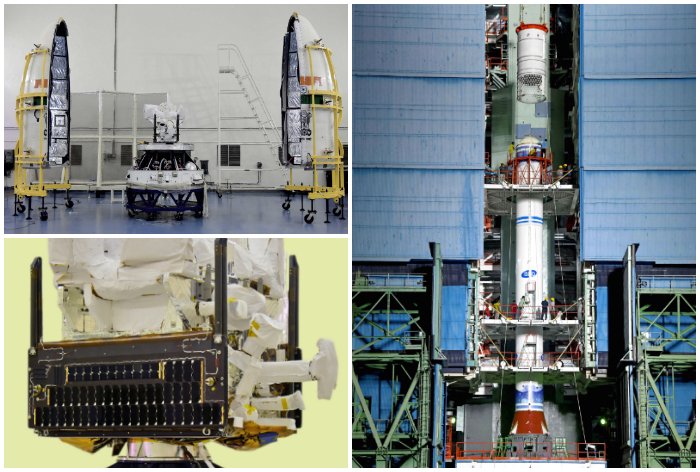
The smallest SSLV rocket, which measures about 34 metre in height, was planned to be launched on August 15 at 9.17 am and was later rescheduled to August 16, at 9.19 am from the first launch pad at Satish Dhawan Space Centre here.
The primary objectives of the SSLV-D3-EOS-08 mission include designing and developing a microsatellite, creating payload instruments compatible with the microsatellite bus, and incorporating new technologies required for future operational satellites, ISRO said.
With today’s mission, ISRO completes the developmental flight of the smallest rocket which can carry satellites weighing up to 500 kg and can place them into Low Earth Orbit (of up to 500 km above Earth).
The mission would also give a boost to NewSpace India Ltd, the commercial arm of ISRO to take up commercial launches using such Small Satellite Launch Vehicles with the industry.
Built on the Microsat/IMS-1 bus, the Earth Observation Satellite carries three payloads: Electro Optical Infrared Payload (EOIR), Global Navigation Satellite System-Reflectometry payload (GNSS-R), and SiC UV Dosimeter.
The spacecraft has a mission life of one year. It has a mass of approximately 175.5 kg and generates power of around 420 W. The satellite interfaces with the SSLV-D3/IBL-358 launch vehicle, ISRO said.
The first payload EOIR is designed to capture images in the Mid-Wave IR (MIR) and Long-Wave IR (LWIR) bands, both during the day and night, for applications such as satellite-based surveillance, disaster monitoring, environmental monitoring, fire detection, volcanic activity observation, and industrial and power plant disaster monitoring.
The second payload encompassing GNSS-R technology highlights its remarkable usefulness across a plethora of remote sensing applications. This ranges from evaluating wind patterns over the ocean’s surface, gauging soil moisture, exploring the icy landscapes of the Himalayas, flood recognition, to pinpointing water bodies inland.
The third piece of equipment, a SiC UV Dosimeter, has been vested with the responsibility of keeping track of UV radiation levels at the Crew Module’s observation point throughout the Gaganyaan Mission. Adding to this, it functions as an alert system for high levels of gamma radiation.