
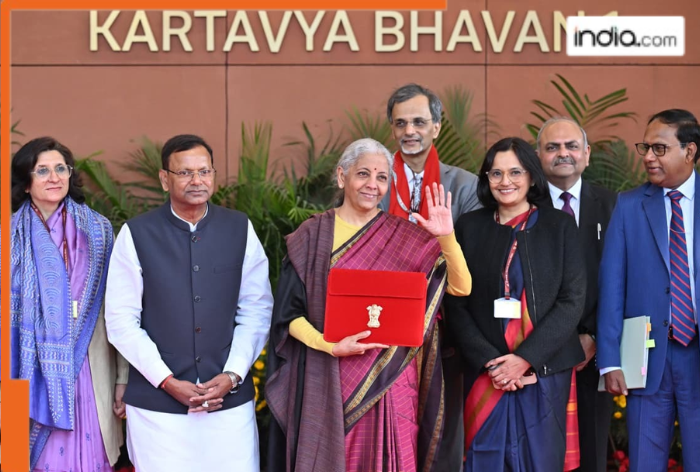
Union Budget 2026: In a big update from the the Union Budget 2026–27, Finance minister Nirmala Sitharaman has announced a major update aimed at strengthening the Lakhpati Didi Yojna. Notably, the Lakhpati Didi Yojna is a flagship initiative designed to financially empower women, particularly those linked with self‑help groups (SHGs).
What has Nirmala Sitharaman announced in Lakhpati Didi Yojna?
Under the revised Budget proposals, the government aims to expand the reach of the Lakhpati Didi initiative by increasing the number of women beneficiaries, building on its earlier achievements. This follows earlier enhancements to the programme, under which the target was raised from the initial 2 crore to 3 crore women entrepreneurs earning at least ₹1 lakh annually through self-employment and micro-enterprise activities.
Finance Ministry announces SHE Marts
As part of the revised strategy, the Budget also announced the introduction of SHE Marts—a network of community-owned retail outlets designed to support women entrepreneurs by offering market access and platforms to sell their products and services. These outlets will be established within cluster-level federations of women entrepreneurs, enabling them to move from credit-linked livelihood activities to owning and operating enterprises in their own right.
Govt proposes dedicated freight corridor between Gujarat and West Bengal
Union Finance Minister Nirmala Sitharaman proposed a dedicated freight corridor connecting Surat in Gujarat and Dankuni in West Bengal. The new freight corridor will establish a direct link between the two states, setting up new corridors for logistics and freight movement.
Read more:
The Finance Minister also proposed to operationalise 20 new national waterways over the next five years, to promote an environmentally sustainable route for cargo movement.
The dedicated freight corridor between Gujarat and Bengal assumes significance as the Eastern state is slated to go to polls later this year. The corridor will traverse through multiple states across the Eastern and Western regions and connect the wealthier and industrial zones of Gujarat with Bengal, a relatively inferior and laggard state on various indexes of growth.