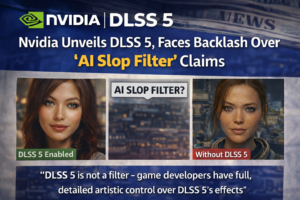


Take-Two Interactive CEO Strauss Zelnick has weighed in on the growing role of artificial intelligence in the gaming industry, stating that while AI can support development, it is unlikely to create blockbuster titles on its own. His remarks come amid increasing debate around AI tools, especially following criticism of Nvidia’s DLSS 5 technology showcased at GTC 2026.
Zelnick explained that AI can significantly improve efficiency in game development, particularly in generating assets such as textures, environments, and basic design elements. However, he emphasized that producing individual assets is only a small part of building a successful game.
According to him, even if developers can quickly create high-quality assets similar to those seen in major franchises like NBA 2K or EA Sports FC, crafting a hit game involves far more complexity. It requires cohesive design, storytelling, gameplay mechanics, and overall creative direction—areas where human input remains essential.
When asked whether AI-driven tools could simplify the development of massive projects like Grand Theft Auto VI, Zelnick firmly rejected the idea. He noted that developers already have access to advanced tools, yet success still depends heavily on human creativity. He also reiterated that GTA VI is being entirely handcrafted by Rockstar Games, with no involvement of generative AI.
Zelnick highlighted that despite technological advancements, the gaming industry continues to produce thousands of titles each year, but only a small fraction achieve commercial success. These successes typically come from well-funded studios or highly skilled independent teams, underscoring the importance of talent and execution over automation.
He further stressed that creating a hit game requires creativity, judgment, and emotional engagement—qualities that cannot be replicated by AI. While technology continues to evolve, the core principles of successful entertainment remain unchanged.
His comments arrive at a time when AI’s role in gaming is under intense scrutiny. Nvidia’s DLSS 5 has faced backlash from parts of the gaming community, with critics labeling it an overreliance on AI-driven enhancements. Additionally, controversy has emerged around the use of AI in certain game developments, with some projects facing criticism and even losing recognition due to undisclosed use of generative AI.
As the industry navigates this transition, Zelnick’s stance reinforces a broader sentiment: AI may transform workflows, but human creativity still defines success in gaming.