
Nvidia has officially introduced DLSS 5, the latest version of its Deep Learning Super Sampling technology, promising a major leap in graphics quality through AI-powered rendering. The company showcased the technology using games like Resident Evil Requiem and Starfield, highlighting enhanced, near-photorealistic visuals.
DLSS 5 uses a real-time neural rendering model designed to improve character detail, lighting, and environmental textures without sacrificing performance. Nvidia has described it as its most significant advancement in graphics since the introduction of real-time ray tracing in 2018.
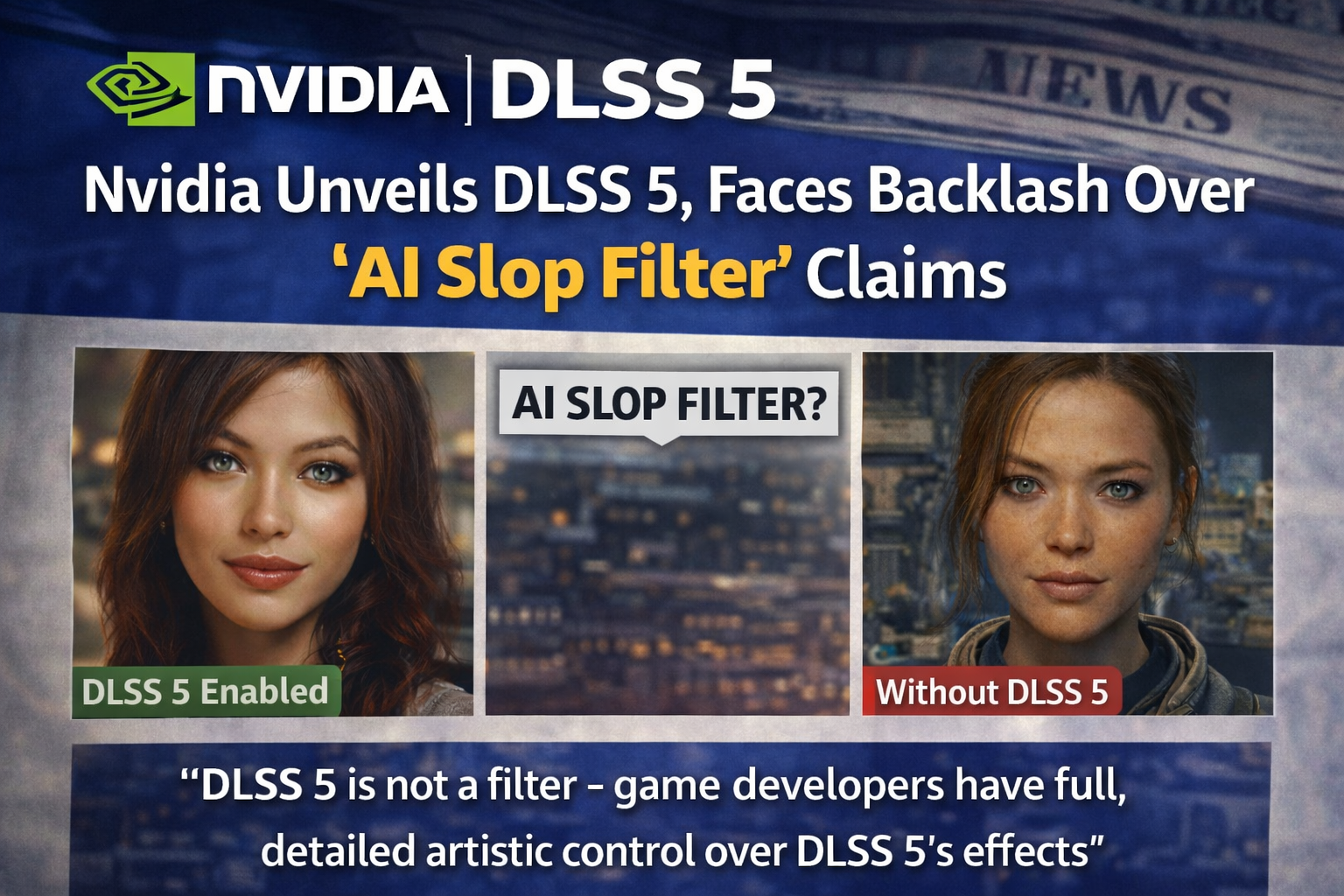
However, the announcement has sparked strong criticism from the gaming community. Many players argue that DLSS 5 alters the original artistic intent of games. In demonstration videos, characters appeared noticeably different, with smoother skin, altered facial features, and effects resembling social media beauty filters.
One of the most discussed examples came from Resident Evil Requiem, where the protagonist’s appearance seemed modified with added makeup-like effects. Similarly, in Starfield, characters looked significantly different when DLSS 5 was enabled, leading to concerns about inconsistency in visual identity.
Gamers quickly reacted online, labeling the technology an “AI slop filter” and sharing memes criticizing what they see as over-processed visuals. Terms like “deep learning super slop” and “slop tracing” began trending across platforms.
In response to the backlash, Nvidia clarified that DLSS 5 is not a simple filter and does not override artistic direction. The company stated that developers retain full control over how the technology is applied, including settings for intensity, color grading, and selective usage across scenes.
“DLSS 5 integrates directly with a game’s rendering data, ensuring results remain grounded in the original content,” Nvidia explained, emphasizing that the system uses motion vectors and color inputs from each frame.
Bethesda, whose game Starfield was featured in the demo, also addressed concerns. Director Todd Howard initially praised the technology, calling its visual enhancements impressive. However, the studio later clarified that the showcased visuals were early previews and would be refined further by developers. The final implementation, they noted, will remain optional for players.
Despite the controversy, several major studios—including Capcom, Ubisoft, Tencent, Warner Bros. Games, and others—have confirmed support for DLSS 5 in upcoming titles.
Nvidia plans to launch DLSS 5 in fall 2026, positioning it as a transformative step in AI-driven graphics, even as debates around creative control and visual authenticity continue.