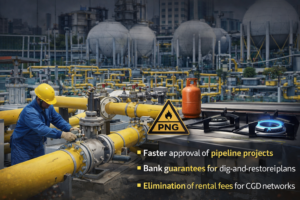

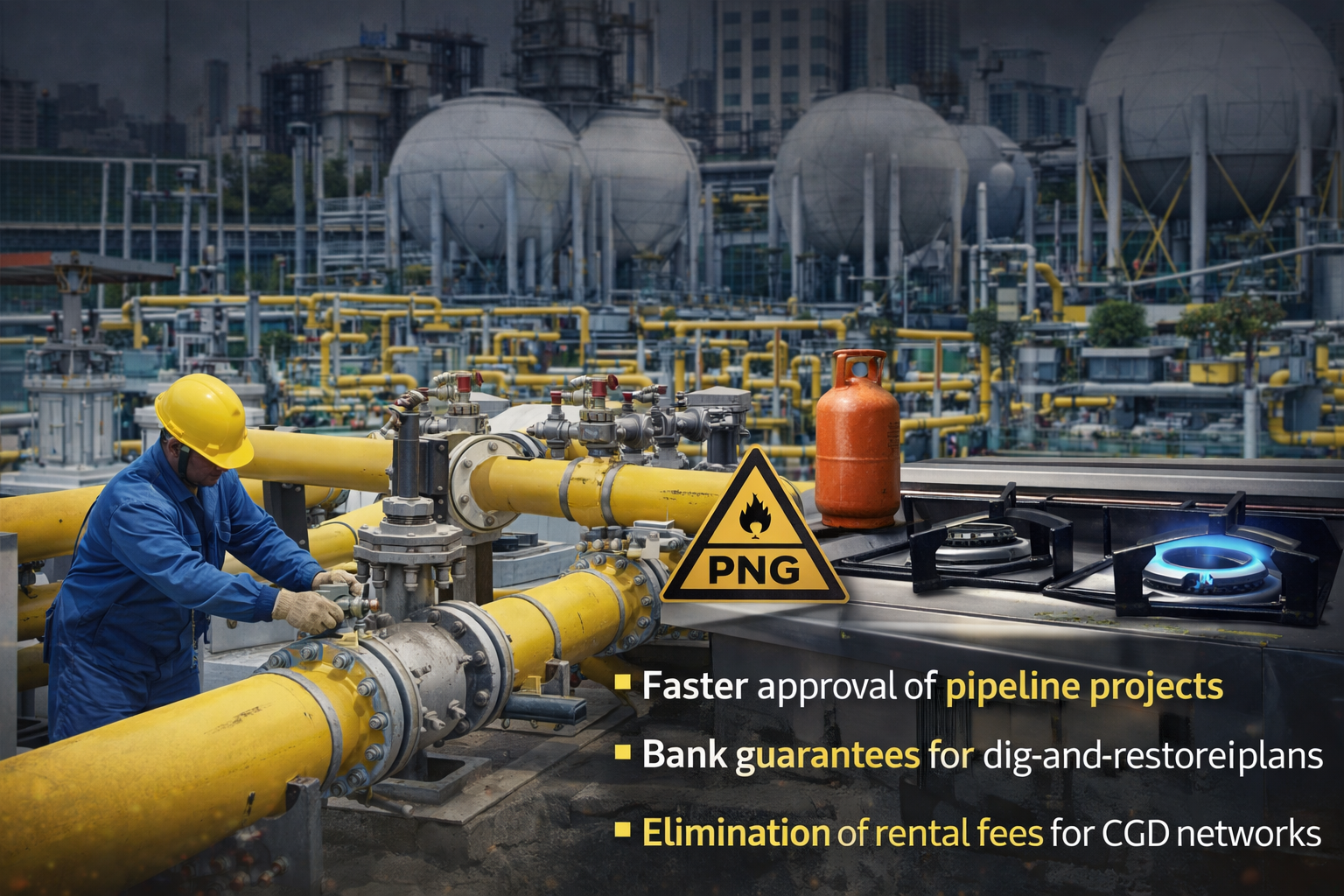
The Union Ministry of Petroleum and Natural Gas has called on states and Union Territories to ease local levies and regulatory barriers affecting City Gas Distribution (CGD) projects. The move aims to accelerate the adoption of piped natural gas (PNG) as a cleaner and more efficient alternative to LPG, particularly for commercial users.
In a letter addressed to Chief Secretaries, Petroleum Secretary Dr. Neeraj Mittal highlighted that high charges—such as right-of-way fees, road cutting costs, and lease rentals—are discouraging investments in CGD infrastructure. These financial and procedural hurdles, imposed by local bodies, are slowing the expansion of PNG networks across the country.
The ministry noted that the CGD sector, especially PNG supply for households and businesses, operates without direct subsidies. As a result, it relies heavily on viable returns on investment. Excessive and inconsistent levies across different states are making it difficult for companies to scale operations efficiently.
Officials warned that such taxation on a developing sector could hinder economic growth, while rationalising these charges could lead to increased gas consumption, broader infrastructure use, and higher long-term revenue generation.
The ministry also pointed out a significant gap between infrastructure rollout and actual usage. While approximately 12.63 crore PNG connections have been reported, only around 1.6 crore are currently active. Addressing this gap, the government stressed the need for business-friendly reforms to improve adoption rates.
The push for PNG adoption is also linked to the ongoing shortage of LPG supplies amid geopolitical tensions in the Middle East. Currently, oil marketing companies are supplying only about 20% of normal commercial LPG demand. Transitioning commercial establishments—such as hotels and restaurants—to PNG could help ease this pressure.
To encourage reforms, the ministry proposed increasing LPG allocation to 30% for states that actively promote PNG and CGD infrastructure. Suggested measures include:
- Setting up empowered state and district committees to fast-track approvals
- Introducing single-window clearance systems with approvals within 24 hours
- Implementing a “dig-and-restore” policy using bank guarantees instead of restoration charges
- Eliminating or reducing annual lease and rental fees for CGD networks
The ministry added that compliance with these reforms would be monitored before granting additional LPG allocations.
It also highlighted that GAIL and its subsidiaries have already allocated full gas supply to the commercial PNG segment to support businesses affected by LPG shortages. The initiative aligns with the government’s broader strategy to promote cleaner, domestically sourced energy alternatives.