

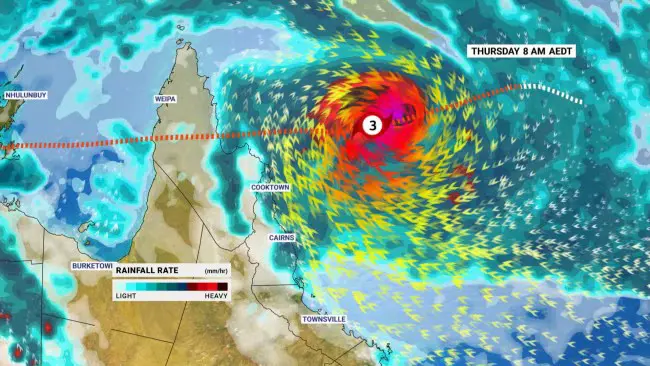
A powerful tropical cyclone has struck northern Queensland, bringing destructive winds and raising serious concerns about severe flooding in the coming days.
Strong Winds but Less Damage Than Feared
Tropical Cyclone Narelle made landfall in Far North Queensland with wind gusts reaching 220 km/h, initially classified as a category four system before weakening to category three.
Despite the intensity:
- No major injuries have been reported
- Infrastructure damage appears limited so far
- Authorities credited residents for following safety instructions
However, some areas have reported roof damage, fallen trees, and widespread disruptions.
Power Outages and Communication Loss
The storm has caused significant disruptions:
- Thousands of homes are without electricity
- Phone networks have been affected in remote regions
- Coastal and Indigenous communities are among the hardest hit
Emergency services continue to assess damage in affected areas.
Flooding Remains the Biggest Threat
Authorities warn that the main danger is heavy rainfall and flooding:
- Up to 500mm of rain expected in parts of the region
- Already saturated ground increases flood risk
- Flash flooding is likely in low-lying areas
Officials have urged residents to remain cautious even as winds begin to ease.
Storm Moving Toward Northern Territory
The cyclone is now moving inland and is expected to head toward the Northern Territory.
There are concerns that:
- Warm waters in the Gulf region could re-strengthen the system
- Additional communities may face heavy rain and flooding
- Evacuations have already taken place in vulnerable areas
Emergency Measures Underway
Authorities have taken precautionary steps:
- Residents in high-risk areas have been evacuated
- Emergency shelters and field hospitals are being prepared
- Disaster response teams are on standby
Officials continue to urge people to stay alert and follow safety guidance.
Impact on Coastal Areas
Even regions far from landfall have felt the impact:
- Beaches have been eroded in tourist areas
- Strong winds and tides have altered coastal conditions
- Travel and tourism have been disrupted