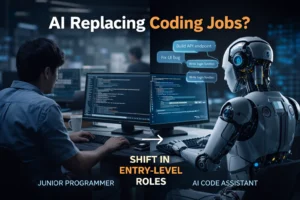

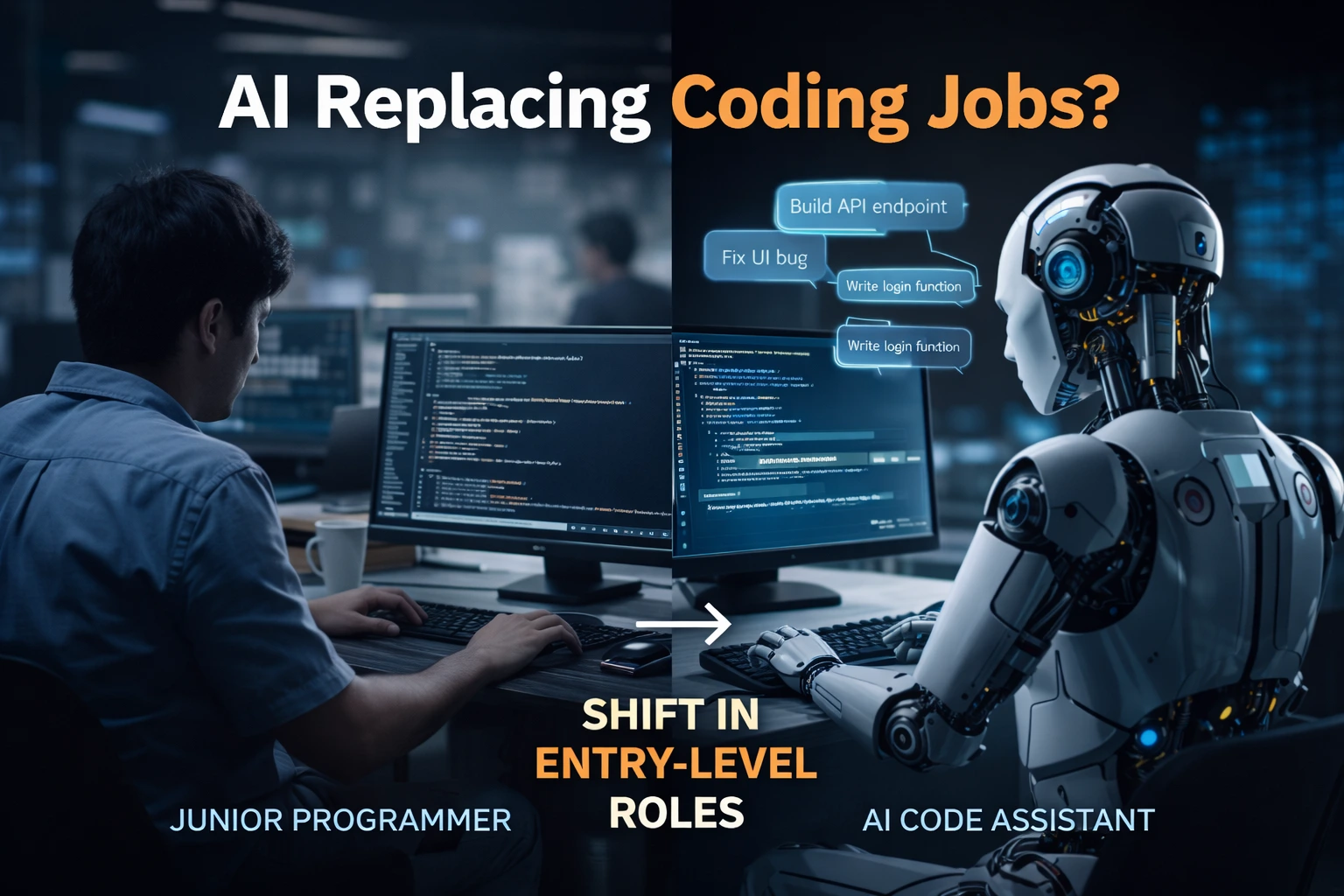
The rapid growth of artificial intelligence is shaking up the software industry, leading to an important question: is AI taking over coding jobs, particularly for those just starting out? As tools like AI code assistants and large language models get smarter, the traditional role of junior developers is experiencing a significant shift.
Experts in the field believe that while AI isn’t completely wiping out jobs, it is dramatically altering how entry-level programming tasks are approached. Activities that used to require hands-on coding—like writing basic functions, creating simple interfaces, and fixing minor bugs—are increasingly being managed by AI systems.
From Writing Code to Guiding AI
The most notable change is in how developers engage with technology. Instead of painstakingly writing code line by line, many are now explaining what they need to AI tools, which can whip up functional code in mere seconds. This change mirrors past shifts from low-level programming to more user-friendly high-level languages.
Consequently, companies are starting to expect junior developers to spend less time on syntax and more on problem-solving, testing, and validating the output generated by AI.
Entry-Level Roles Are Evolving, Not Disappearing
Even though worries about AI taking over coding jobs are on the rise, experts stress that entry-level positions aren’t disappearing—they’re being redefined. The new wave of developers is anticipated to:
- Collaborate with AI tools
- Review and debug code produced by AI
- Grasp system-level thinking
- Translate business requirements into technical solutions
This transformation is giving rise to a fresh type of entry-level role that combines coding expertise with the ability to interact with AI.
Hiring Trends Reflect the Change
Some companies have already begun to cut back on hiring for traditional junior coding positions, instead seeking developers who can effectively utilize AI tools. This has created a perception that entry-level job opportunities are dwindling.
However, the need for skilled engineers remains robust—especially for those who can adapt to workflows driven by AI.
The Bigger Picture
The ongoing discussion about AI taking over coding jobs really points to a bigger shift happening in the tech world. Instead of wiping out developers, AI is nudging the workforce towards roles that require more strategic thinking and decision-making.
Experts suggest that developers who stick to just writing code might run into some hurdles in the near future. Conversely, those who welcome AI and concentrate on tackling real-world challenges will still be highly sought after.
Conclusion
AI isn’t signaling the end of coding jobs; rather, it marks a transformation in how we approach coding. Entry-level positions are changing into AI-enhanced roles, where grasping systems and their outcomes is becoming more crucial than manually typing out every single line of code.