
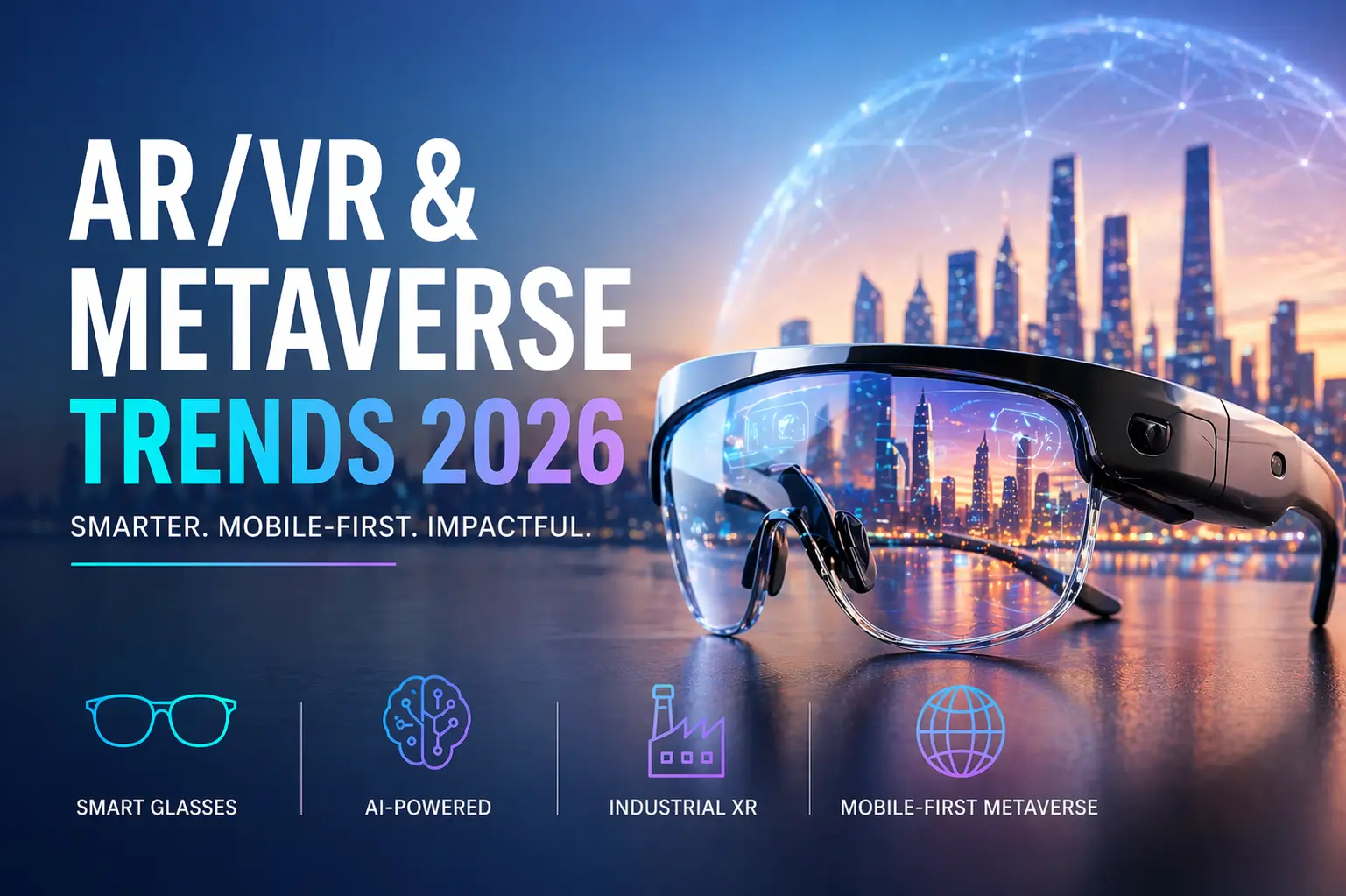
The AR/VR and Metaverse landscape is undergoing a major transformation in 2026. The focus is shifting away from virtual social worlds toward high-performance hardware, mobile-first experiences, and industrial applications.
From breakthrough AR display technology to shifting strategies from big tech companies, today’s developments highlight a more practical and scalable future for extended reality.
Himax Unveils Ultra-Bright AR Display Breakthrough
At Display Week 2026, Himax Technologies introduced a significant advancement in LCoS microdisplay technology.
The new “Dual-Edge Front-lit” display achieves an impressive 350,000 nits brightness, solving one of AR’s biggest challenges-visibility in bright outdoor environments.
Why This Matters
- Enables clear AR visuals even in direct sunlight
- Extremely lightweight (just 0.2 grams)
- Moves AR glasses closer to everyday wearable spectacles
This innovation could finally make all-day AR glasses usage practical and comfortable.
Meta Shifts Metaverse Strategy Toward Mobile
Meta is making a major strategic pivot in how users experience the metaverse.
Key Updates
- Horizon Worlds will continue supporting VR due to strong community demand
- However, the primary focus is now on mobile and web platforms
- Development resources are shifting toward the Meta Horizon engine for mobile
According to CTO Andrew Bosworth, this move reflects a broader vision:
The metaverse will be mobile-first, not headset-first
Apple vs Samsung: The Smart Glasses Race Intensifie
The competition between Apple and Samsung is heating up in the smart glasses segment.
Apple’s Approach
- Developing “screenless” smart glasses
- Focus on spatial audio and AI interaction
- Expected launch around 2027
Samsung’s Strategy
- Preparing Galaxy Glasses with full AR capabilities
- Built on Android XR ecosystem
- Includes cameras and immersive visual overlays
- Potential release expected later in 2026
This divergence highlights two competing visions:
Audio-first minimalism vs full AR immersion
Rise of the Industrial Metaverse
While consumer VR is experiencing slower growth, the industrial metaverse is rapidly expanding.
Key Trends
- Increased use of Digital Twins for real-world simulation
- Adoption in industries like manufacturing, healthcare, and logistics
- XR-powered training programs becoming mainstream
Market Outlook
Analysts predict the B2B AR/VR market could reach $264 billion by the end of 2026, driven by enterprise demand rather than consumer entertainment.
Conclusion: A More Practical Future for AR/VR
The metaverse is no longer just about virtual hangouts—it’s evolving into a utility-driven ecosystem powered by AI, mobile access, and enterprise use cases.
With innovations in hardware, strategic pivots from tech giants, and rapid industrial adoption, AR/VR is entering a new phase focused on real-world value and scalability.