
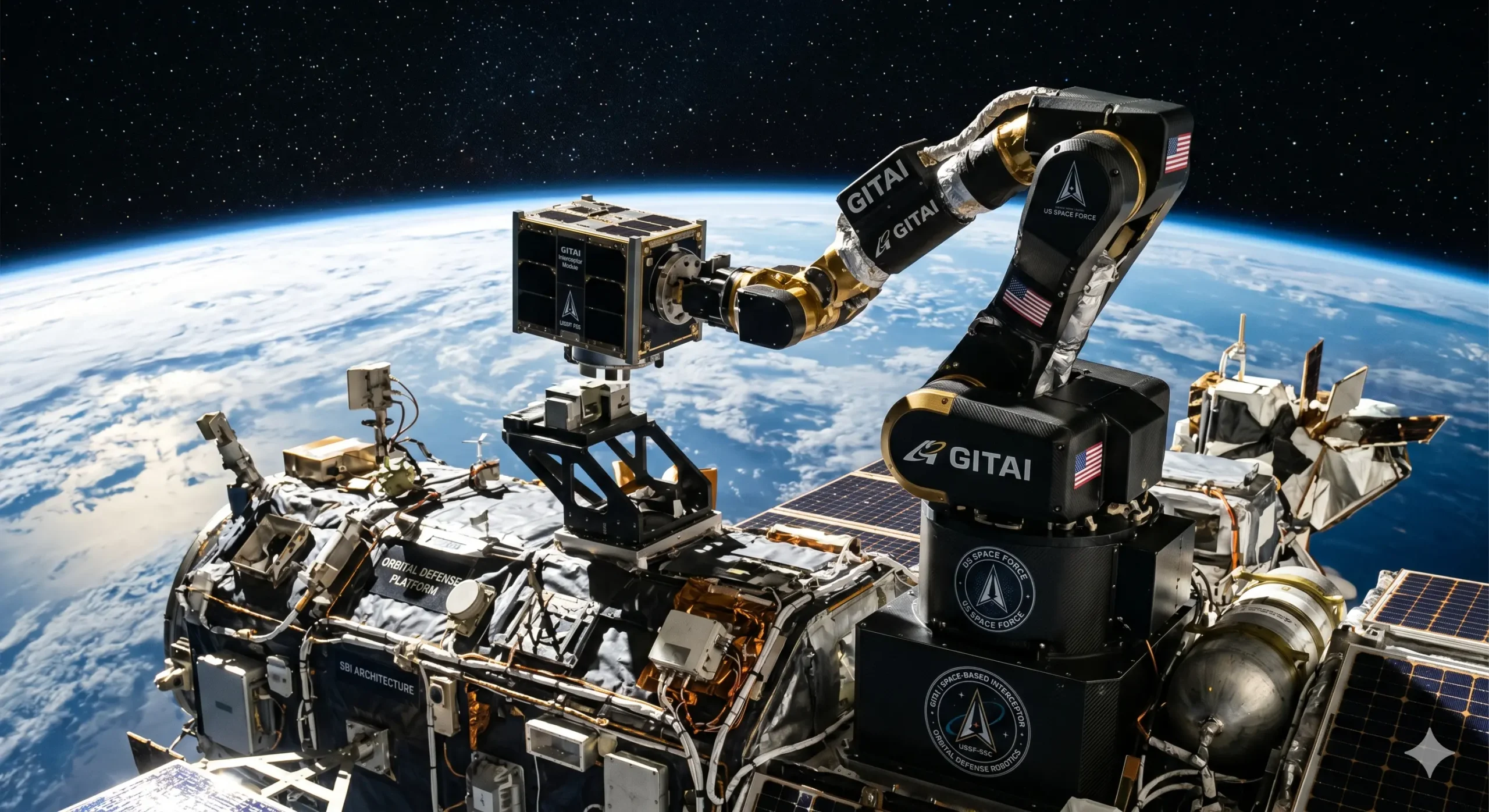
The future of space defense is no longer science fiction – it is rapidly becoming a strategic reality. Japanese-American space robotics company GITAI has been selected by the U.S. Space Force Space Systems Command for the Space-Based Interceptor (SBI) programme, a move that highlights the growing role of autonomous robotics and satellite platforms in national security infrastructure.
The announcement places GITAI among a small group of companies tasked with advancing technologies capable of supporting orbital missile defense systems. The programme is reportedly aligned with broader U.S. efforts to develop a “Golden Dome” architecture for next-generation defense capabilities in space.
Why This Matters
For decades, missile defense systems have largely been ground- or sea-based. The SBI initiative represents a shift toward persistent space-based defense infrastructure — systems capable of detecting, tracking, and potentially intercepting threats directly from orbit.
This transition requires more than conventional satellites. It demands highly reliable robotic systems, modular spacecraft, autonomous operations, and rapid deployment cycles. That is where GITAI enters the picture.
The company has built its reputation around in-space robotics and vertically integrated spacecraft development. According to the company, it develops many of its spacecraft and interceptor-related components internally, helping reduce dependence on complex supply chains while accelerating development timelines.
From Space Robotics Startup to Defense Contractor
Founded with the vision of making space labor safer and cheaper, GITAI originally focused on robotic arms, lunar infrastructure systems, and autonomous orbital servicing technologies. Over time, the company expanded into satellite platforms and defense-oriented space systems.
Its recent selection by the U.S. Space Force demonstrates how commercial space robotics firms are increasingly becoming strategic defense partners.
The company has already demonstrated several technologies in orbit, including robotic systems tested aboard the International Space Station and internally developed satellite platforms operating in low Earth orbit. These missions appear to have strengthened its credibility for national security applications.
The Strategic Importance of Space Robotics
Orbital defense systems require hardware capable of operating autonomously in harsh environments for extended periods. Human intervention is limited, communication delays can matter, and maintenance opportunities are rare.
Robotics therefore becomes a core enabling technology.
Autonomous robotic systems can:
- Perform on-orbit servicing and repairs
- Deploy and reposition payloads
- Assist with satellite assembly in space
- Enable responsive defense infrastructure
- Reduce mission costs and launch mass
GITAI’s expertise in robotic manipulation and spacecraft integration gives it a strong position in this emerging sector.
The broader implication is that the line between commercial space infrastructure and military capability is becoming increasingly blurred. Companies once focused on exploration and industrial space operations are now helping shape national defense architecture.
A Broader Shift in the Space Industry
The SBI programme also reflects a larger trend across the aerospace sector: governments are increasingly relying on agile private companies instead of traditional defense giants alone.
Smaller, innovation-focused firms can often iterate faster, build cheaper systems, and adopt modern manufacturing techniques more efficiently than legacy contractors.
Space startups are no longer confined to experimental missions or niche technologies. They are becoming central players in geopolitical strategy, orbital infrastructure, and defense modernization.
This mirrors developments across the global space economy, where commercial companies are now deeply involved in satellite constellations, lunar exploration, debris removal, and autonomous orbital logistics.
Challenges Ahead
Despite the excitement, major technical and geopolitical challenges remain.
Space-based interceptor systems are controversial due to concerns around:
- weaponization of space
- escalation of geopolitical tensions
- orbital debris risks
- legal and treaty implications
Technically, maintaining reliable autonomous systems in orbit for defense applications is extraordinarily difficult. Thermal management, radiation tolerance, secure communications, and precision guidance all remain major engineering hurdles.
For GITAI, participation in the programme is likely just the beginning. The company will still need to meet demanding technical milestones and prove that its systems can operate reliably in mission-critical environments.