
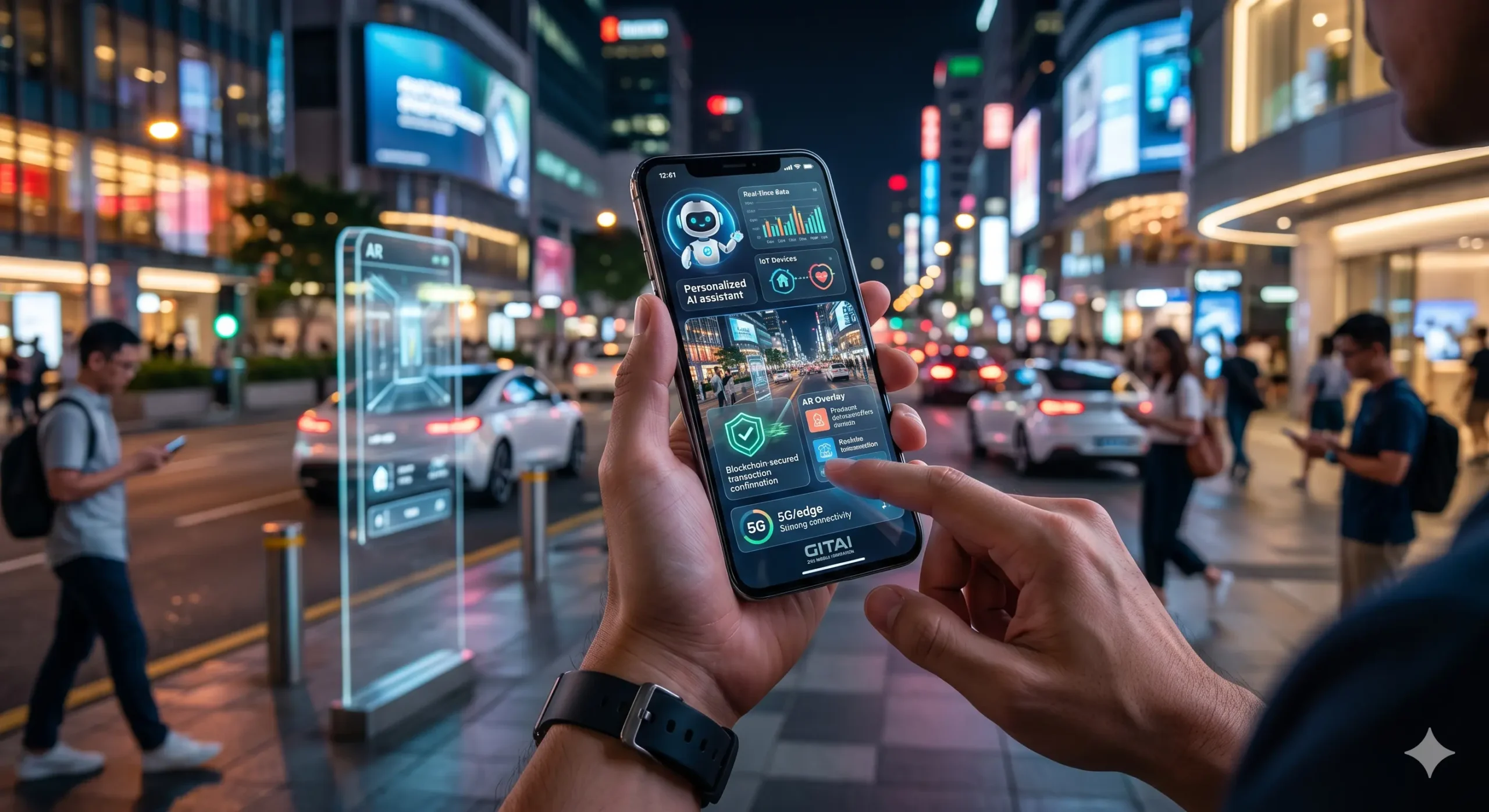
Mobile applications are evolving faster than ever, transforming from simple digital tools into intelligent platforms that drive customer engagement, business growth, and operational efficiency. As businesses prepare for 2026, emerging technologies such as artificial intelligence, 5G, blockchain, and immersive experiences are redefining how mobile apps are designed and developed.
Companies that embrace these innovations early can improve user experiences, streamline operations, and gain a significant competitive advantage in the digital marketplace. Here are the top mobile app development trends expected to dominate 2026.
1. AI-Powered Mobile Experiences
Artificial intelligence is becoming a core component of modern mobile applications. Businesses are using AI to create personalized experiences, automate support systems, and improve user engagement.
AI-driven apps can now analyze user behavior, recommend content, provide predictive suggestions, and power advanced chatbots. Features such as voice recognition, smart automation, and real-time personalization are helping businesses deliver highly customized mobile experiences.
2. Rise of Cross-Platform App Development
Cross-platform frameworks continue to gain popularity because they reduce development costs and speed up deployment. Technologies like Flutter, React Native, and Kotlin Multiplatform allow developers to build apps for Android and iOS using a single codebase.
Businesses prefer cross-platform development because it shortens time-to-market while maintaining near-native performance and consistent user experiences across devices.
3. 5G Technology Enhancing Mobile Performance
The widespread adoption of 5G networks is significantly improving mobile app capabilities. Faster internet speeds and reduced latency enable smoother streaming, better gaming experiences, and real-time cloud interactions.
Apps that rely on AR, VR, video conferencing, and live data processing will benefit the most from 5G-powered infrastructure. Developers are now designing applications that can leverage high-speed connectivity for improved performance and responsiveness.
4. Augmented Reality and Virtual Reality Integration
AR and VR technologies are transforming industries such as retail, healthcare, education, and gaming. Mobile apps now offer immersive experiences that allow users to interact with products, services, and environments in entirely new ways.
Retail brands are implementing virtual try-on solutions, while educational platforms are using immersive learning experiences to improve engagement. As AR and VR technologies become more accessible, their role in mobile applications will continue to expand.
5. Low-Code and No-Code Development Platforms
Low-code and no-code platforms are helping businesses accelerate app development with minimal coding requirements. These platforms enable companies to quickly build prototypes, automate workflows, and launch applications faster.
While traditional development remains essential for complex applications, low-code tools are becoming valuable for startups and enterprises seeking rapid digital transformation.
6. Blockchain-Powered Mobile Applications
Blockchain technology is improving mobile app security, transparency, and decentralization. Industries such as finance, healthcare, and supply chain management are increasingly integrating blockchain into mobile platforms.
Mobile wallets, decentralized finance (DeFi) apps, NFT marketplaces, and secure payment systems are driving blockchain adoption. The technology also strengthens data protection and user authentication.
7. Internet of Things (IoT) Connectivity
The growth of smart devices is fueling demand for IoT-enabled mobile applications. Apps can now connect seamlessly with wearables, home automation systems, healthcare devices, and industrial equipment.
Businesses are leveraging IoT-powered apps to monitor devices remotely, gather real-time data, and automate processes. This trend is expected to expand as connected ecosystems continue to evolve.
8. Enhanced Mobile App Security
As cyber threats become more advanced, mobile app security is becoming a top priority. Developers are implementing stronger encryption methods, biometric authentication, and AI-based threat detection to safeguard user data.
Privacy regulations and increasing user concerns around data security are pushing companies to invest in secure development practices and compliance-focused mobile architectures.
9. Super Apps and Multi-Service Platforms
Super apps are gaining traction by combining multiple services within a single application. These platforms offer features such as payments, shopping, messaging, transportation, and entertainment in one ecosystem.
Businesses are exploring super app models to improve user retention and create seamless digital experiences. This trend is particularly growing in fintech and eCommerce sectors.
10. Edge Computing for Faster Processing
Edge computing reduces latency by processing data closer to the user rather than relying entirely on centralized cloud servers. This approach improves app speed, responsiveness, and reliability.
Industries requiring real-time processing, such as gaming, healthcare, and logistics, are increasingly adopting edge computing within mobile ecosystems.