
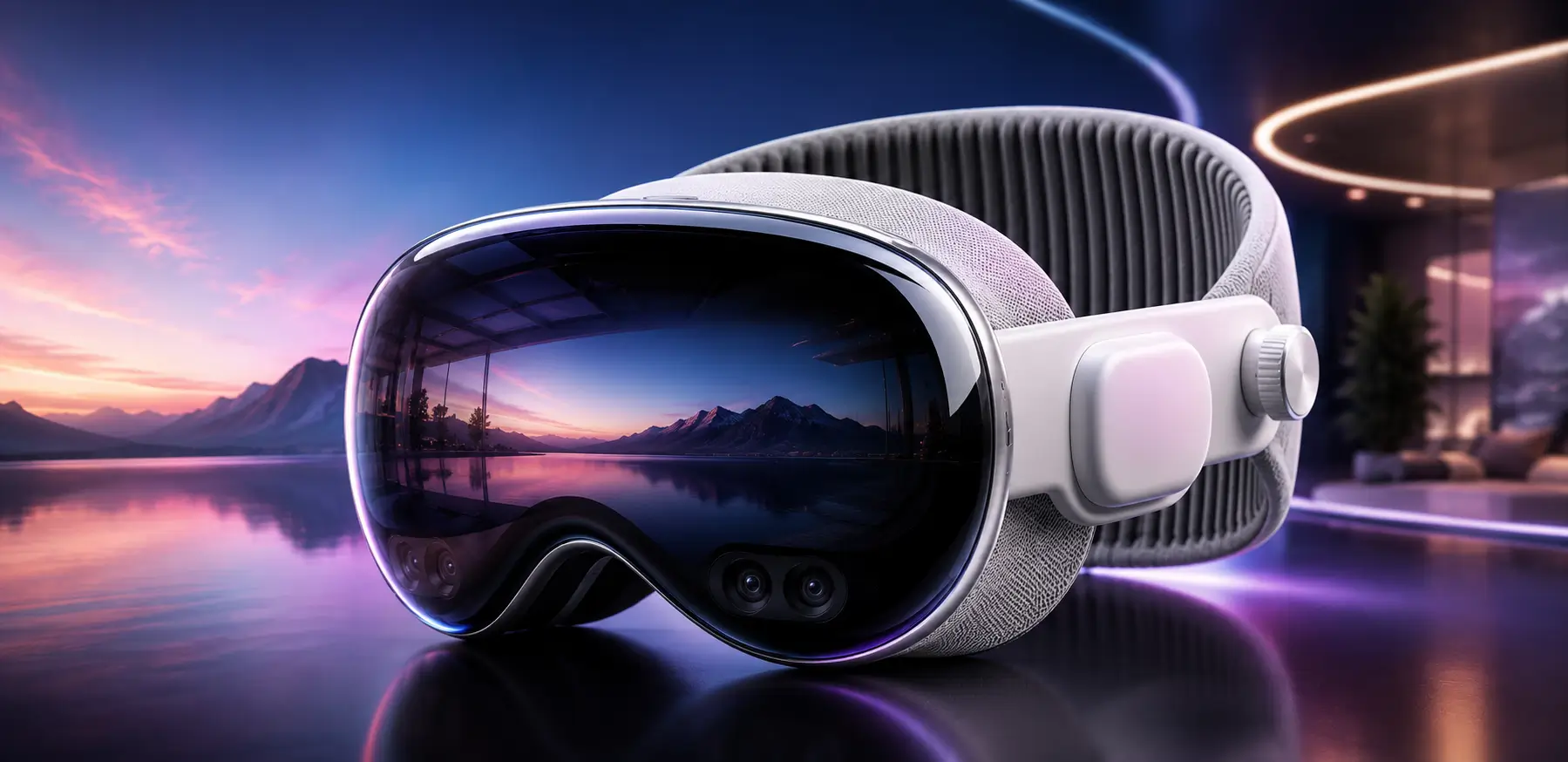
The highly anticipated Apple Vision Pro Headset is officially set to launch in the United States on February 2, marking Apple’s first major step into the spatial computing and mixed reality market.
Apple CEO Tim Cook confirmed the launch date while describing the product as the beginning of a “new era of spatial computing.” Pre-orders for the device are expected to begin on January 19 in the US, although Apple has not yet announced international release dates.
The Apple Vision Pro Headset combines augmented reality (AR) and virtual reality (VR) technologies to create immersive digital experiences that blend seamlessly with the real world. Apple aims to redefine how users interact with digital content through eye tracking, hand gestures, and voice controls instead of traditional controllers.
Priced at $3,499, the Apple Vision Pro Headset becomes one of Apple’s most expensive consumer products in recent years. The device includes 256GB of storage and is powered by Apple’s M2 chip alongside a newly developed R1 processor that handles data from cameras, sensors, and microphones in real time.
Spatial computing has rapidly become one of the biggest emerging technology trends, combining AI, extended reality (XR), sensors, and Internet of Things (IoT) technologies to create interactive environments. Industry experts believe these technologies could transform sectors such as education, healthcare, gaming, workplace collaboration, and professional training.
Apple’s headset launch also places the company directly in competition with Meta, which currently dominates the VR headset market through products like the Meta Quest 3. Unlike traditional VR devices, the Apple Vision Pro Headset focuses heavily on mixed reality experiences that merge virtual content into physical spaces.
Despite growing excitement around the launch, there has also been skepticism surrounding whether spatial computing devices can achieve mainstream success. Reports previously suggested that some Apple executives internally viewed the project as experimental during its early stages.
Still, many analysts believe the Apple Vision Pro Headset could become a major turning point for the tech industry, similar to the impact of the iPhone when it first launched. Supporters argue that Apple’s ecosystem, software optimization, and premium hardware design could help accelerate adoption of spatial computing technology.
The headset launch also comes during a challenging period for Apple’s business performance. The company recently experienced declining revenues and increasing pressure from competitors investing heavily in artificial intelligence and immersive technologies.
As Apple enters the mixed reality market for the first time, the success of the Apple Vision Pro Headset could play a major role in shaping the future of spatial computing and next-generation digital experiences.