

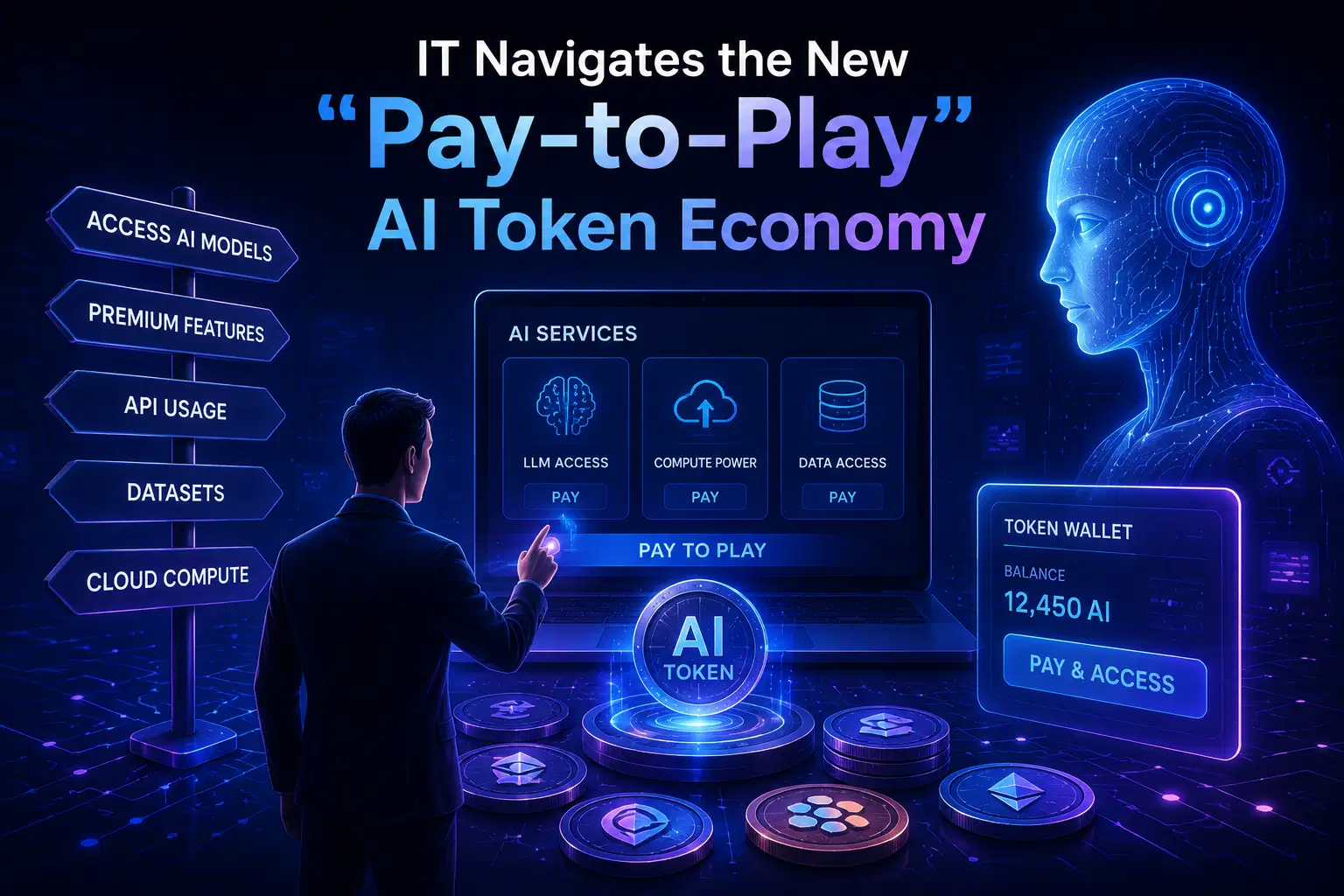
Artificial intelligence is rapidly transforming enterprise operations, but a new challenge is emerging for IT companies and their clients — managing the growing cost of AI token consumption. As AI adoption scales across industries, businesses are shifting from predictable subscription pricing to usage-based AI models, where every interaction with an AI system carries a measurable token cost.
Major AI providers are increasingly adopting token-based pricing structures, pushing enterprises to rethink how they evaluate the return on AI investments. Instead of paying fixed licensing fees, organizations now need to monitor how efficiently their AI systems consume tokens while ensuring those expenses translate into real business value.
According to industry leaders, this transition represents more than a technological shift — it introduces a completely new financial framework for enterprise AI. Companies are no longer just investing in software tools; they are effectively purchasing AI processing power in real time. This has created pressure on IT service providers to develop smarter governance models for token usage, budgeting, and operational optimization.
Organizations like Infosys are encouraging wider AI experimentation internally while simultaneously recognizing that not every token spent will immediately generate measurable returns. Executives believe the current phase of AI adoption is still heavily innovation-driven, where learning and experimentation remain essential parts of long-term transformation.
The challenge becomes even more complex when IT providers manage AI-powered projects for clients operating under strict cost and productivity expectations. Since AI workloads fluctuate significantly, predicting token consumption accurately remains difficult. Companies often either underestimate or exceed projected usage, making financial planning increasingly complicated.
To address this issue, many enterprises are introducing token monitoring systems, consumption dashboards, and internal allocation frameworks. Some organizations now assign monthly token budgets to engineering or scrum teams to improve visibility and accountability across AI projects. This helps businesses track whether AI spending aligns with operational outcomes and productivity goals.
The pricing structure of AI implementation deals is also evolving. Enterprises are increasingly adopting hybrid commercial models that combine fixed implementation fees with variable charges linked to AI usage volumes. While this creates flexibility for customers, it also introduces financial risks for IT service providers, especially when AI costs rise unexpectedly during long-term contracts.
Industry analysts believe the future of enterprise AI success will depend heavily on “AI token economics” — the ability to balance innovation with sustainable spending. Businesses that can efficiently optimize token usage while extracting measurable business outcomes will gain a competitive advantage in the emerging AI economy.
As enterprises continue integrating generative AI and agentic AI systems into daily operations, token management is quickly becoming as important as cloud cost optimization once was. The companies that master this new AI financial landscape early are likely to lead the next phase of digital transformation.