
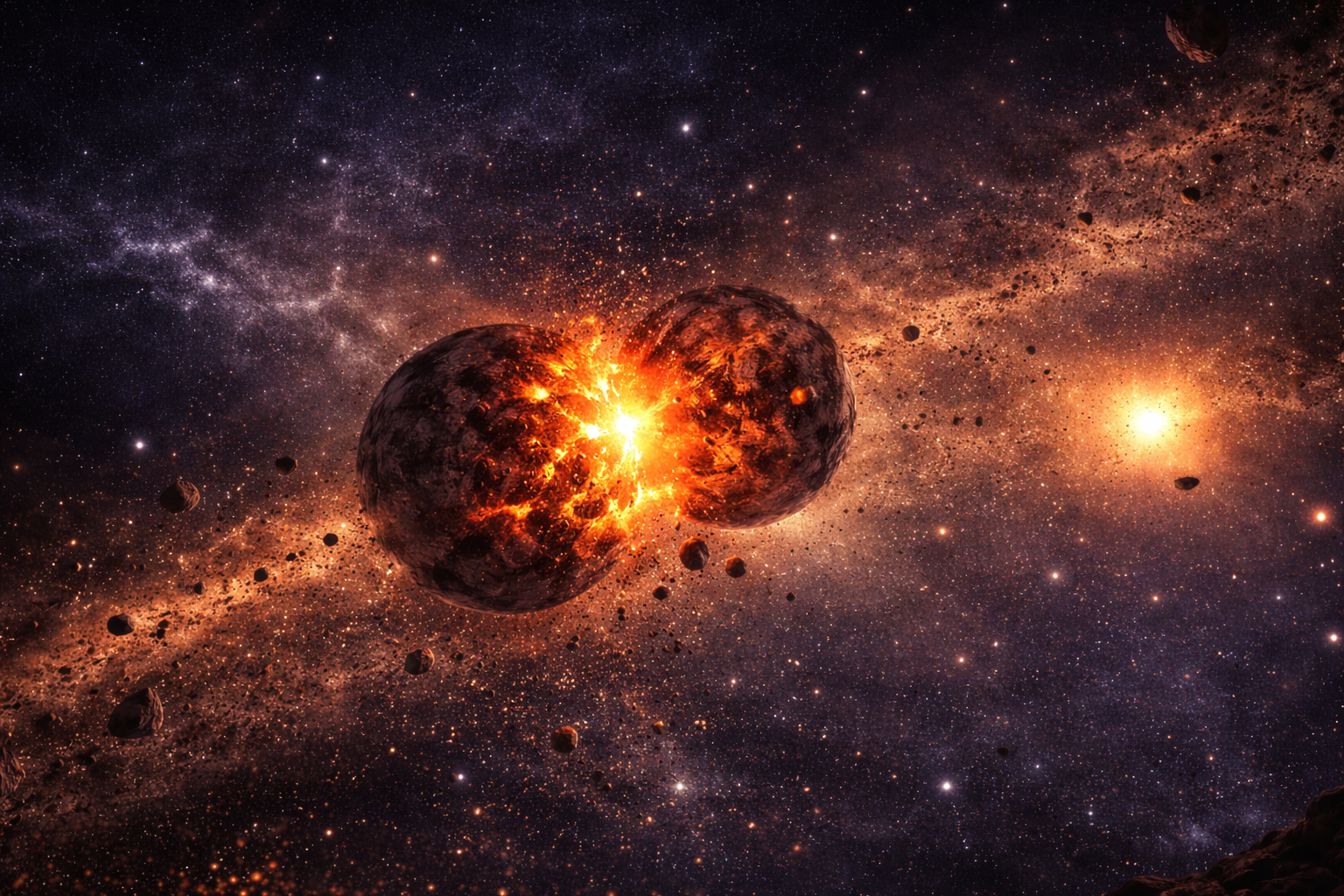
Astronomers have detected evidence of a dramatic collision between two exoplanets in a distant star system located nearly 11,000 light-years from Earth. The discovery offers a rare glimpse into planetary formation processes similar to those that shaped our own solar system.
The unusual activity was first noticed in a star known as Gaia20ekh, located near the constellation Puppis. Initially behaving like a typical sun-like star, it began showing unexpected fluctuations in brightness starting in 2016. These irregular dimming events intensified around 2021, puzzling researchers.
Scientists soon determined that the changes were not caused by the star itself but by a massive cloud of debris—rocks and dust—passing in front of it. This material periodically blocked the star’s light, creating noticeable dips in brightness when observed from Earth.
Further analysis revealed that the debris originated from a violent collision between two orbiting planets. The impact generated an विशाल cloud of material that now orbits the star, occasionally obscuring its light.
Researchers described the event as extremely rare, noting that only a handful of such planetary collisions have ever been observed. What makes this discovery particularly significant is its similarity to the ancient collision believed to have formed Earth’s Moon around 4.5 billion years ago.
The debris cloud created by the impact spans an enormous distance—approximately 93 million miles, comparable to the distance between Earth and the Sun. Observing such an event requires precise alignment, where the orbiting debris passes directly between Earth and the star, making detection possible.
Astronomers say that capturing such collisions in real time provides valuable insights into how planets form and evolve. Continued observation of similar events could help scientists better understand the origins of planetary systems, including our own.