

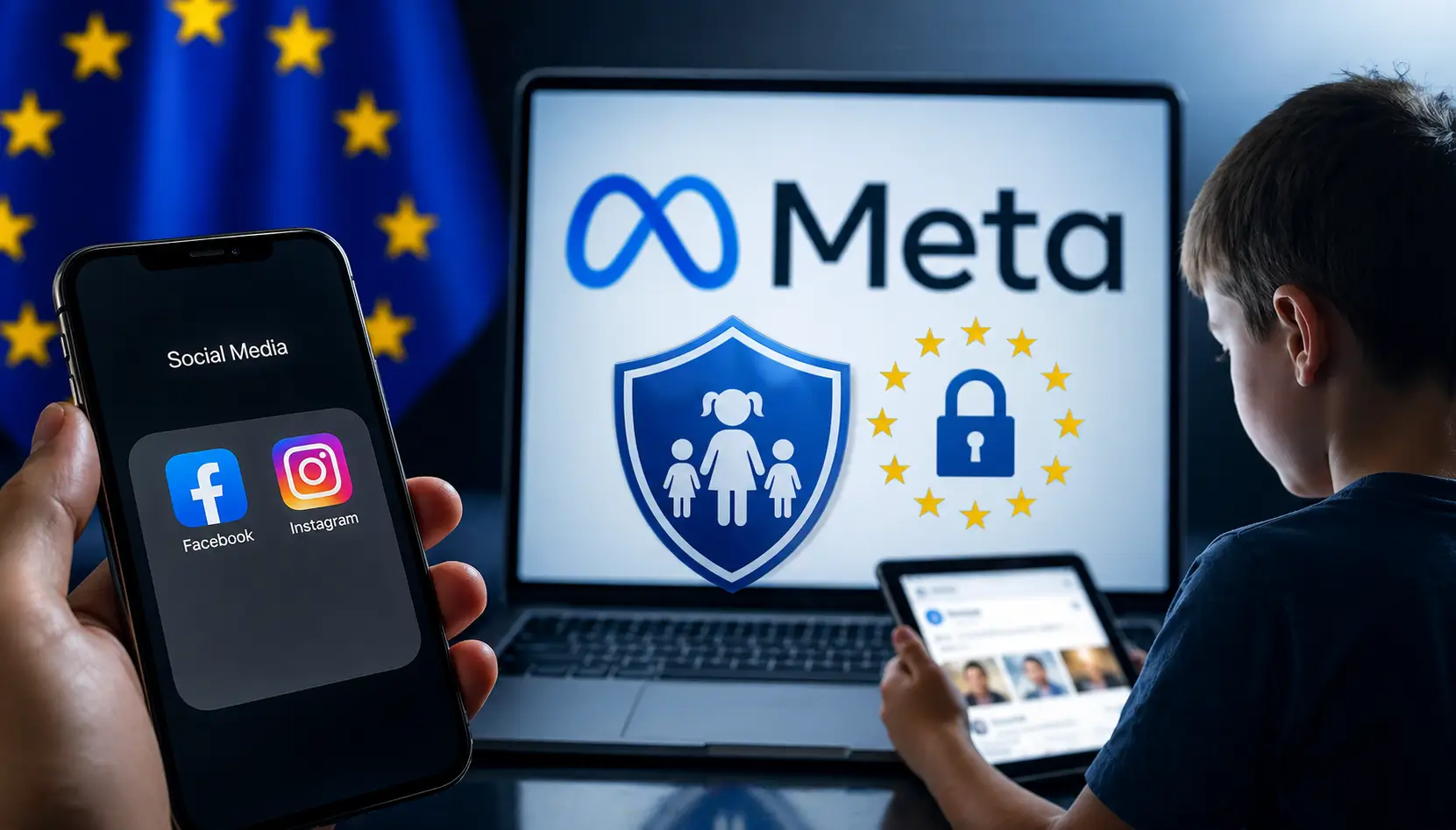
Meta is under increasing pressure in Europe as regulators move to enforce stricter child safety laws for platforms like Facebook and Instagram.
The new rules are part of the European Union’s broader push to protect minors online and hold tech companies accountable for platform safety.
What the New EU Law Targets
The European Union is focusing on:
- Protecting minors from harmful or addictive content
- Limiting targeted advertising for children
- Enforcing stricter data privacy standards
These measures are designed to create a safer digital environment for young users.
Why Meta Is Under Scrutiny
Regulators believe that platforms like Facebook and Instagram may:
- Expose minors to inappropriate content
- Use algorithms that encourage excessive screen time
- Collect and process data without sufficient safeguards
This has raised serious concerns about child safety and digital well-being.
Key Changes Meta May Need to Implement
To comply with EU regulations, Meta could be required to:
1. Strengthen Content Controls
- Better filtering of harmful content
- Age-appropriate recommendations
2. Limit Data Usage
- Reduced tracking of minors
- Restrictions on personalized ads
3. Improve Transparency
- Clear policies on how content is shown
- Greater accountability for algorithmic decisions
Impact on Social Media Platforms
This development could reshape how social platforms operate:
- Increased compliance costs
- Changes to recommendation algorithms
- More focus on user safety over engagement
Other tech companies may also face similar regulations globally.
Why This News Is Trending
- Highlights growing global concern over child safety online
- Signals stricter regulation for big tech companies
- Could impact millions of users across Europe
Conclusion
The EU’s action against Meta marks a significant step toward regulating social media platforms. As governments push for stronger protections, companies will need to balance user engagement with safety and compliance.