
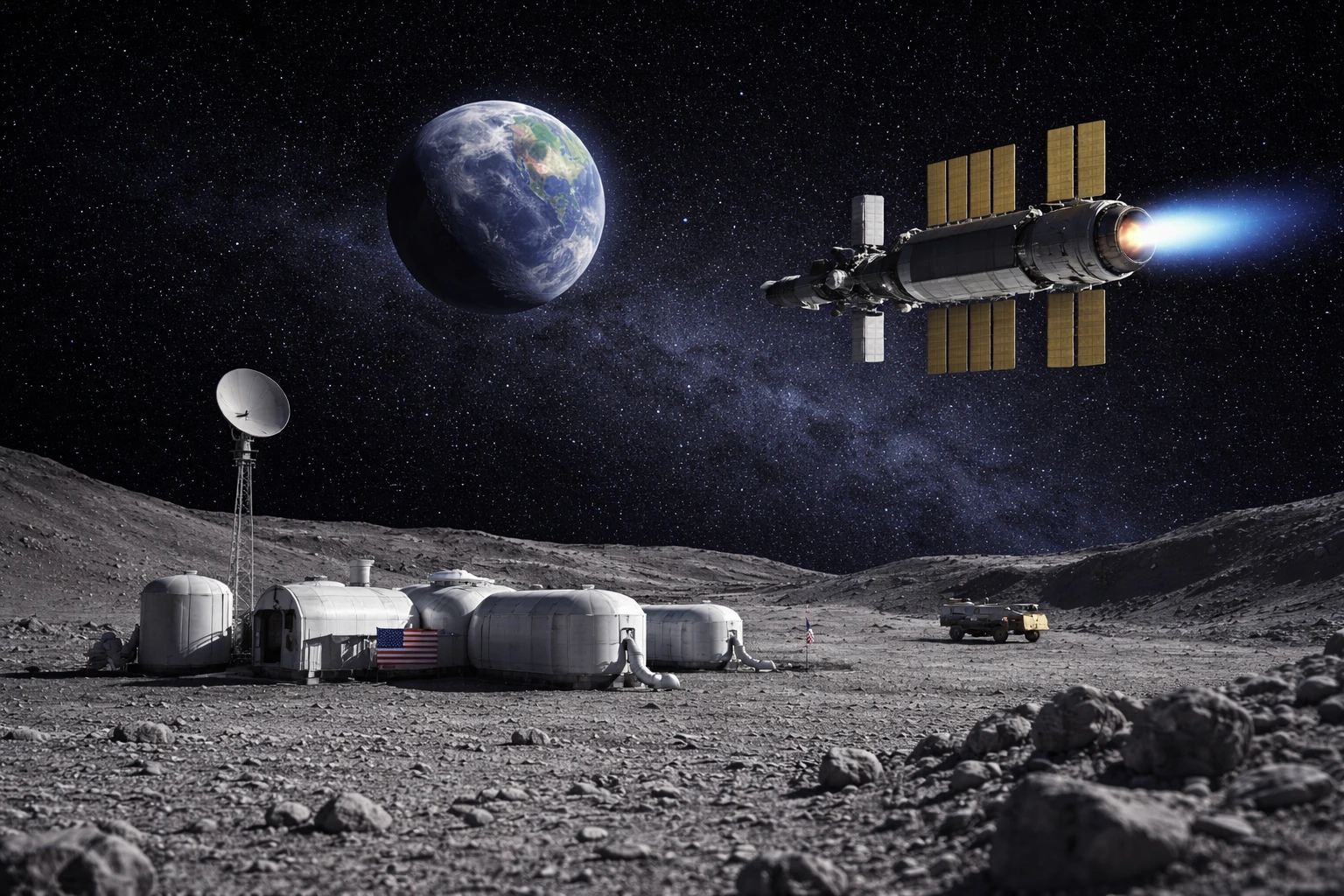
NASA is ramping up its lunar ambitions with an exciting new plan that aims to establish a permanent base on the Moon and develop a nuclear-powered spacecraft for deep space exploration. This marks a significant shift in the agency’s long-term strategy, emphasizing a sustained human presence beyond our planet.
Reports indicate that NASA is launching a multibillion-dollar initiative to create infrastructure on the Moon. This includes sending robotic landers, deploying drones, and prepping the lunar surface for future human missions.
Moon Base Takes Priority
In a significant pivot, NASA is stepping away from its previous idea of building a space station in lunar orbit. Instead, the agency is zeroing in on constructing a base right on the Moon’s surface. The aim is to develop a long-term habitat that can support astronauts for extended stays.
The strategy follows a phased approach starting with robotic missions, then moving on to semi-habitable systems, and ultimately establishing a permanent human base.
NASA officials explain that this step-by-step method is designed to minimize risks and enhance mission success, much like the approach taken during the Apollo program.
Nuclear-Powered Spacecraft for Mars
In addition to the Moon base initiative, NASA is also developing a nuclear-powered spacecraft called Space Reactor-1 Freedom. This spacecraft is expected to launch around 2028 and will showcase nuclear electric propulsion technology for future missions to Mars.
This mission could be pivotal in enabling quicker and more efficient travel through deep space, as nuclear propulsion offers significant benefits over traditional fuel systems.
Detect AI-generated content and transform it into something that feels more human with our AI Content Detector. Just paste your text, and you’ll receive accurate, relatable results in no time!
Here’s the text we’re diving into: Focus on Long-Term Space Presence
NASA has recently updated its roadmap, marking a significant shift from short-term exploration to a focus on long-term habitation in space. The planned Moon base will act as a crucial testing ground for the technologies we’ll need for future missions to Mars, such as energy systems, habitats, and autonomous operations.
Additionally, the agency is gearing up for more frequent lunar missions, both with crews and without, to speed up development and keep the momentum going in space exploration.
Global Competition Driving Urgency
NASA’s Moon program is expanding in response to the growing global competition in space, especially from China, which has its sights set on a crewed Moon landing by 2030.
By ramping up its plans, NASA is striving to maintain its leadership in the next chapter of space exploration while also laying the foundation for human missions to Mars and beyond.