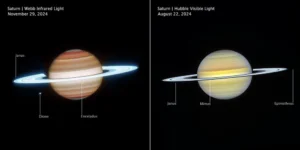

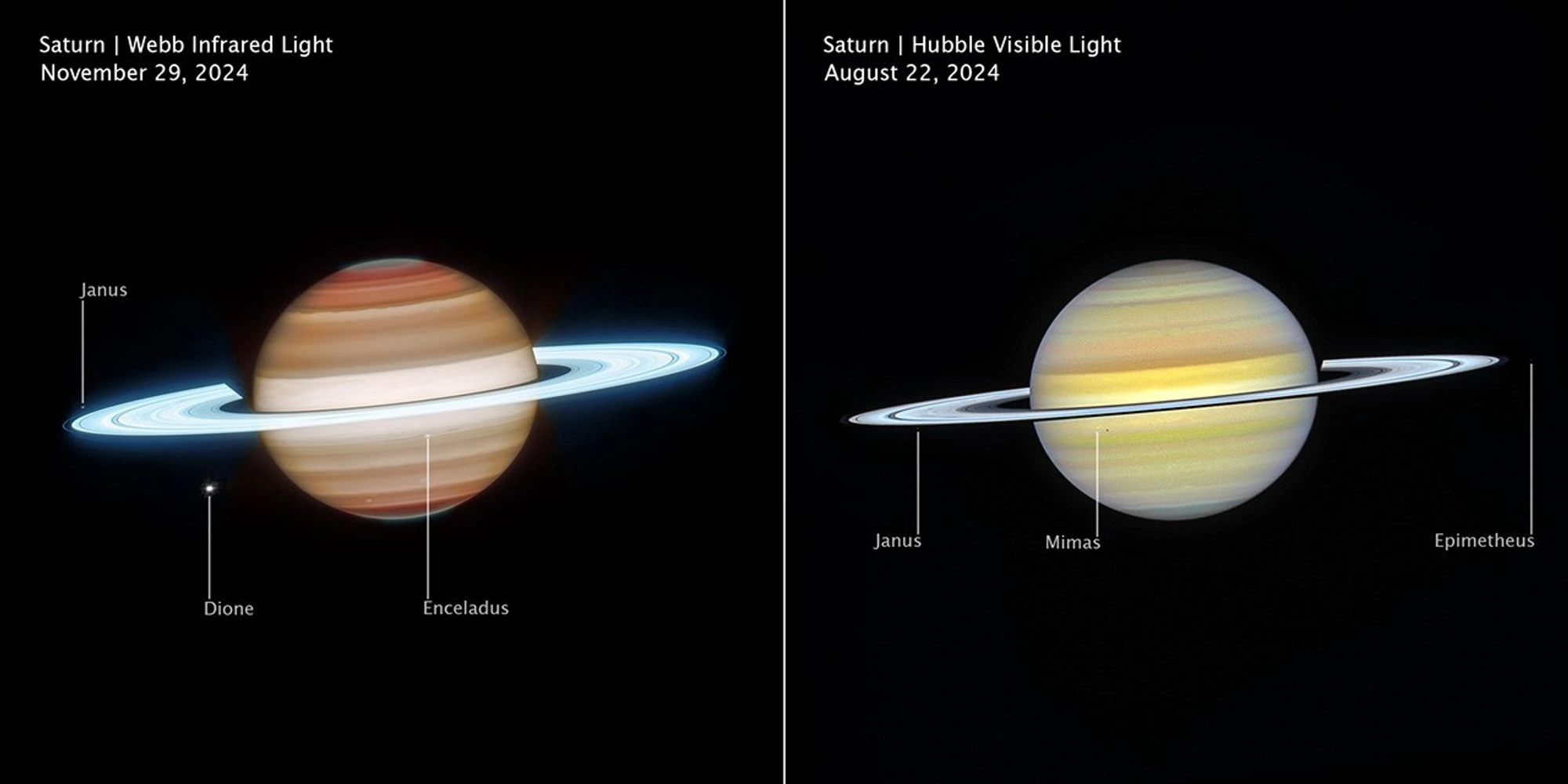
NASA has just unveiled a stunning collection of images showcasing Saturn, providing one of the clearest views of this gas giant we’ve ever seen. This incredible achievement comes from a powerful partnership between the James Webb Space Telescope and the Hubble Space Telescope, which worked together across various wavelengths to present the planet in a whole new light.
According to NASA, these combined observations offer the most thorough look at Saturn to date, merging infrared, visible, and ultraviolet data into a beautifully layered perspective.
A Fresh Perspective on Saturn
What sets these new images apart is their ability to “peel back” Saturn’s atmosphere. Scientists have noted that each telescope captures different layers, enabling researchers to examine Saturn’s atmosphere as if it were a three-dimensional system.
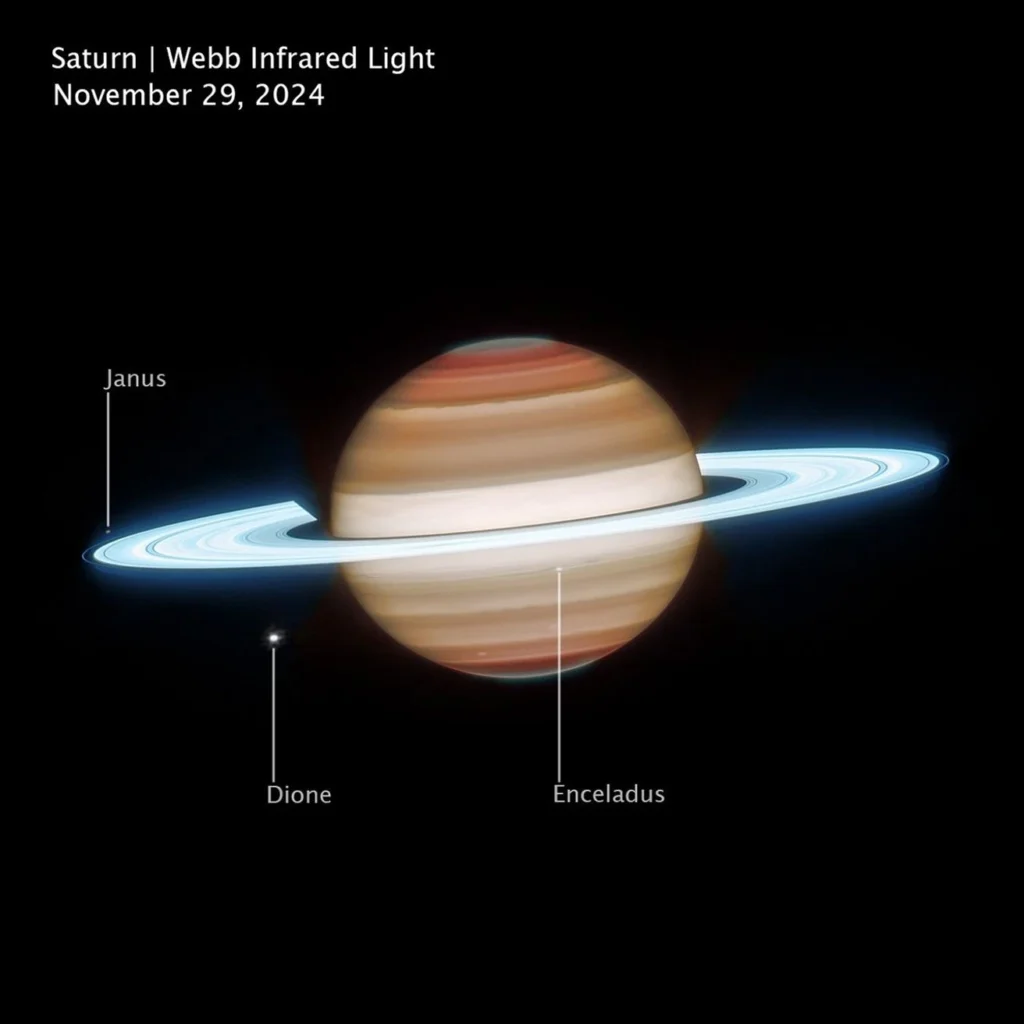
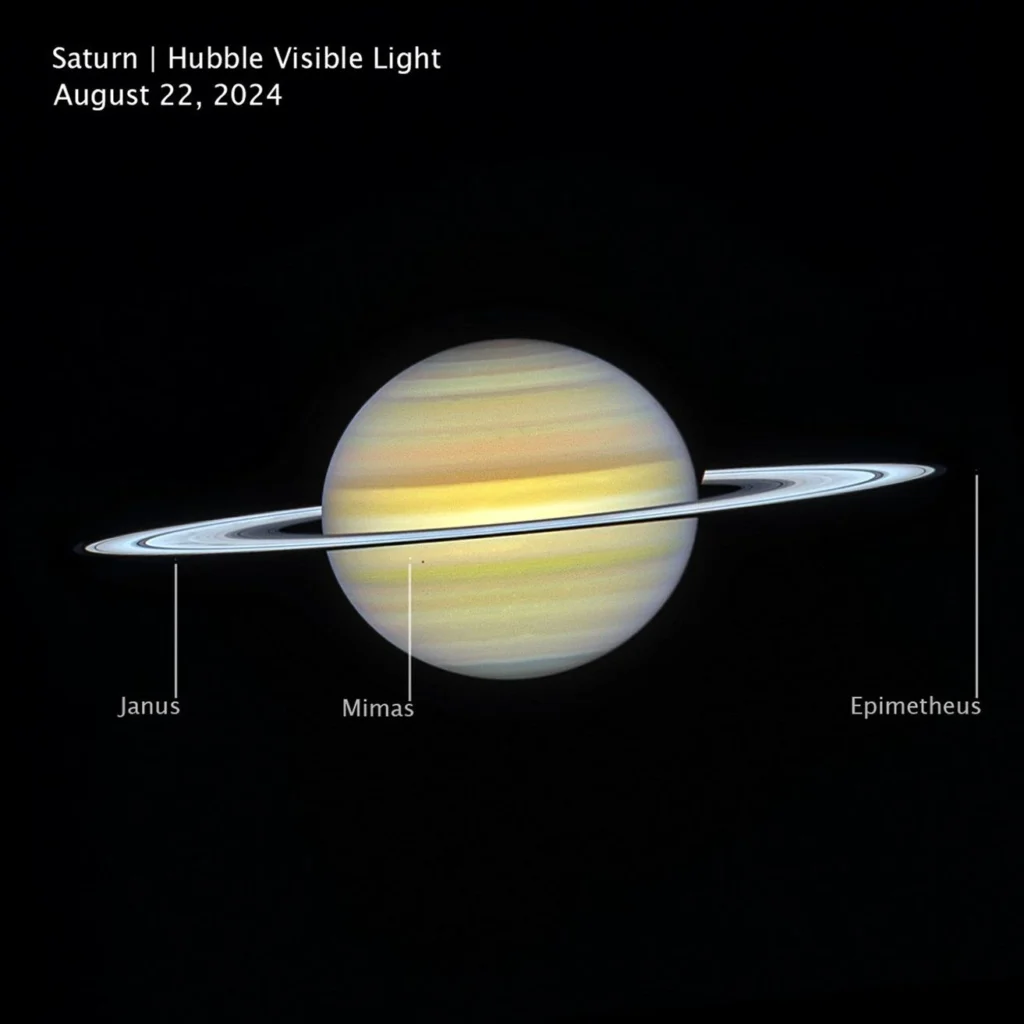
Hubble zooms in on visible light, revealing Saturn’s well-known cloud bands and how they change over time. On the other hand, Webb’s infrared capabilities dig deeper, uncovering hidden heat patterns, storms, and structures lurking beneath the upper cloud layers.
Rings and Moons in Incredible Detail
These new images also shed light on Saturn’s famous rings. In Webb’s infrared view, the rings shine brighter and show more detail, thanks to their composition of reflective water ice.
When comparing data from Webb and Hubble side by side, subtle features within the rings, like spokes and variations in thickness, become much more apparent. The images also showcase several of Saturn’s moons, including Titan, Enceladus, and Dione.
Observing a Dynamic Planet
These observations were captured at different times in 2024, allowing scientists to monitor seasonal changes as Saturn approaches its next equinox. The data reveals shifts in atmospheric activity, including jet streams, storms, and potential auroras.
NASA scientists emphasize that merging long-term Hubble observations with Webb’s cutting-edge infrared imaging provides a richer understanding of how Saturn’s climate and atmosphere evolve over time.
Why This Matters
The latest images of Saturn from NASA really showcase the incredible benefits of using multiple space telescopes. By combining data collected across different wavelengths, scientists can reveal details that would otherwise stay hidden if we relied on just one instrument.
This method not only deepens our understanding of Saturn but also paves the way for future planetary research, where data from various observatories will be crucial in exploring the intricate worlds throughout our solar system.