
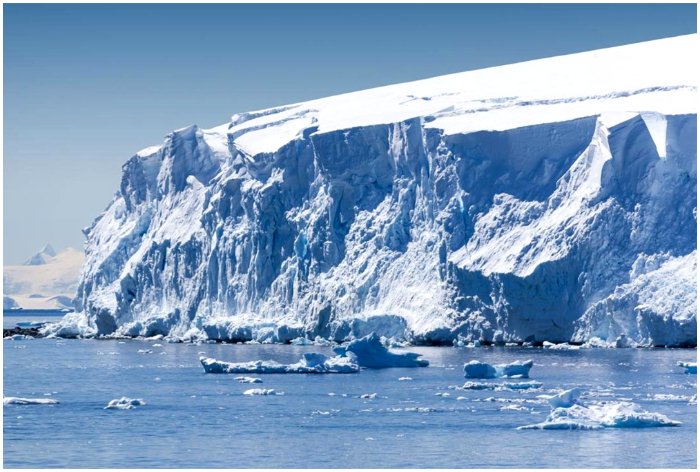
A recent study has revealed shocking facts about Antarctica’s infamous ‘Doomsday Glacier,’ highlighting its vulnerability to warming oceans. Thwaites Glacier, termed the ‘Doomsday Glacier’ due to its potential catastrophic impact on global sea levels, has long been an area of interest for scientists. The new study, utilizing space radar data, has uncovered previously unknown dynamics beneath its icy surface.
Published in the Proceedings of the National Academy of Sciences and conducted by a team of researchers, including glaciologists primarily from the University of California, Irvine, the study used high-resolution satellite radar data to conduct an X-ray-like examination of the glacier.
A thorough analysis by these researchers revealed that ocean water, salty and relatively warm, is infiltrating under the Thwaites Glacier, leading to drastic melting which is never seen before.
Scientists have discovered a phenomenon termed as ‘vigorous melting’, which comes into play when sea water comes into contact with the glacier’s base, leading to destabilization. This revelation throws a spanner in the previously held assumptions about the glacier’s resilience to alterations and hints that the calculations regarding global sea level increases might not have incorporated the influence of Thwaites Glacier fully.
Thwaites Glacier, which is the widest glacier on the planet, contributes 4 percent to global sea level rise. Notably, its melting could lead to a drastic rise of 10-foot in sea levels, posing a dire threat to coastal communities worldwide.
Eric Rignot, a prominent research member of the study, emphasized the crucial nature of the newly gathered data. He expressed previous observations were erratic, unlike the current data set providing unbroken monitoring over an extensive duration. They uncovered notable seawater intrusion beneath the glacier. It’s discovered that tidal activities control the seawater flow, influencing the exterior of the glacier and thus hastening its melting process.
Notable authorities like Ted Scambos of the University of Colorado Boulder commend the study’s findings as remarkable and noteworthy, yet they are also aware of the mysteries that persist. For example, James Smith of the British Antarctic Survey points out the critical need to weave these new insights into ice sheet models while understanding and respecting the complex nature of Antarctica’s environment.
Additionally, a separate study from the British Antarctic Survey revealed some concerning trend of drastically-low sea ice levels surrounding Antarctica. With the stresses of climate change, our coastal ice sheets and glaciers are facing an increased risk of melting and fragmenting.