

Artificial intelligence continues to transform industries at an incredible pace. From automated customer service to AI-powered coding assistants, businesses are investing billions into machine learning technologies. Yet despite all the excitement, one reality is becoming increasingly clear: humans are still more cost-effective than AI compute for many real-world business operations.
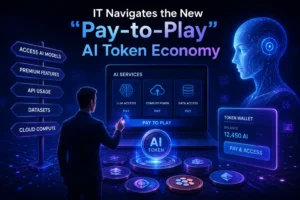
While AI tools promise efficiency and automation, the infrastructure required to power advanced AI systems remains extremely expensive. Companies must pay for high-performance chips, cloud infrastructure, energy consumption, data storage, and continuous model training. In many cases, these expenses can exceed the cost of employing skilled human workers.
The Rising Cost of AI Compute
Modern AI systems require massive computational power. Large language models and generative AI tools rely on thousands of GPUs operating continuously in data centers. As AI adoption increases, businesses are discovering that scaling these systems comes with significant financial challenges.
The cost of AI compute includes:
- GPU and hardware expenses
- Cloud computing fees
- Energy consumption
- AI model training and maintenance
- Data storage and security
- Continuous software optimization
For many organizations, these operational costs are growing faster than expected. Some technology executives have even admitted that their AI budgets surpassed initial projections within months of implementation.
Why Human Workers Still Deliver Better Value
Despite rapid AI innovation, human employees continue to provide flexibility, creativity, emotional intelligence, and problem-solving skills that machines cannot fully replicate. Humans can adapt to changing business environments without requiring expensive retraining or infrastructure upgrades.
In many industries, employees also offer:
- Better decision-making in uncertain situations
- Strong communication and collaboration
- Ethical judgment and empathy
- Creative thinking and innovation
- Lower operational overhead for complex tasks
This is why many businesses are realizing that replacing workers entirely with AI is not always the smartest financial strategy. Instead, companies are finding greater success by combining AI tools with human expertise.
AI Works Best as a Productivity Tool
Rather than replacing employees, AI is increasingly being used to enhance productivity. Businesses are leveraging AI to automate repetitive tasks while allowing workers to focus on higher-value responsibilities.
For example, AI can assist with:
- Data analysis
- Content generation
- Customer support automation
- Software development assistance
- Workflow optimization
However, humans still supervise these systems, validate outputs, and make strategic decisions. This collaborative approach often delivers better long-term results than relying entirely on automation.
Industry leaders have repeatedly emphasized that AI should empower employees rather than eliminate them. Many experts believe the future workplace will center around humans working alongside AI instead of being replaced by it.
The Hidden Infrastructure Problem
One major reason why humans are still more cost-effective than AI compute is the enormous infrastructure required to run modern AI systems.
AI data centers consume tremendous amounts of electricity and cooling resources. Companies must also constantly upgrade hardware to keep pace with rapidly evolving AI models. These ongoing investments create long-term financial pressure for organizations adopting large-scale AI solutions.
Meanwhile, human workers often provide more predictable and sustainable costs, especially for tasks requiring judgment, adaptability, and interpersonal skills.
Research also suggests that human performance still outperforms AI in several complex problem-solving environments, particularly where contextual understanding and nuanced reasoning are essential.
The Future of Human and AI Collaboration
Although AI technology will continue advancing, businesses are learning that automation alone is not a complete solution. The real opportunity lies in combining machine efficiency with human creativity and experience.
Organizations that successfully integrate AI while investing in employee development may gain the greatest competitive advantage in the years ahead.
Instead of asking whether AI will replace humans, companies should focus on how humans and AI can work together more effectively. At least for now, humans remain the more flexible, adaptable, and cost-effective resource for many critical business functions.
Conclusion
The rapid growth of artificial intelligence has sparked concerns about widespread job replacement. However, current evidence shows that humans are still more cost-effective than AI compute in many industries. The high costs of infrastructure, energy, and AI operations continue to limit the economic advantages of full automation.